
Bedroom frost often builds overnight because occupants add moisture while a closed door limits heat and air exchange. Check humidity, supply and return airflow, coverings, and room temperature before blaming the glass.
Alongside the specific checks in Bedroom Window Ice: Overnight Humidity and Closed Doors, review ice forming on windows and compare that guidance with measured conditions in this home.
Why the frost pattern matters
One careful comparison is worth more than a generic product claim. Condensation and frost are related but not interchangeable with a failed seal. Room-side frost is accessible and responds to humidity, airflow, and temperature. Moisture trapped inside a sealed insulating glass cavity persists in different weather and points toward glass-unit service.
Humidity readings answer only part of the question. Health Canada’s broad 30-to-50-percent guidance sits beside a practical cold-weather qualifier: reduce indoor moisture when condensation develops. The correct response therefore depends on temperature, air movement, ventilation, and the thermal performance of the complete window.
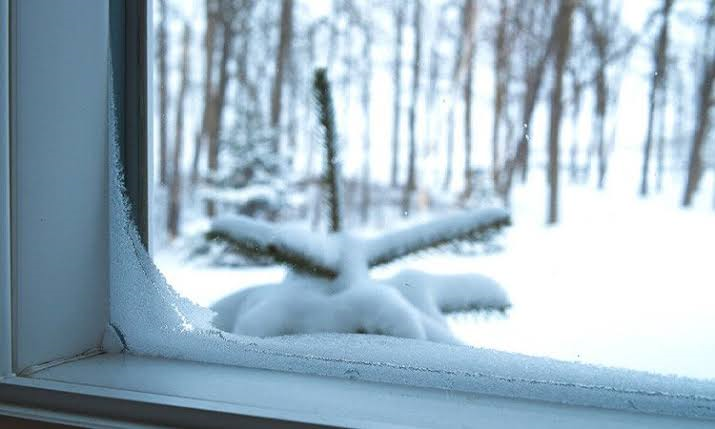
Evidence to collect:
- Bedroom window clears after the door opens.
- Two occupants produce more frost than an empty room.
- Blackout curtains isolate the glass.
- Supply register or return path is obstructed.
Within the diagnostic path for Bedroom Window Ice: Overnight Humidity and Closed Doors, use location and timing to distinguish window ice troubleshooting from between-pane moisture, uncontrolled air leakage, or a room-specific airflow problem.
Practical response
- Measure RH before sleep and at waking.
- Confirm safe supply and return airflow.
- Leave enough covering gap for room heat.
- Use whole-home ventilation as designed.
- Dry the sill each morning while testing.
Illustrative scenario
A child’s bedroom frosts only on nights when the door and blackout curtain are closed. The same window remains clear when unoccupied. That repeatable occupancy pattern supports a room-air test before window work.
What not to assume
Do not reduce ventilation solely to keep bedrooms warmer. A closed, under-ventilated room can accumulate moisture and pollutants. Balance heat delivery and air exchange instead of choosing one at the expense of the other.
When professional help makes sense
Use HVAC help when rooms lack adequate supply, return, or ventilation. Use window service when one sash leaks, the lock does not compress evenly, or moisture is trapped between panes. For a review centred on Bedroom Window Ice: Overnight Humidity and Closed Doors, bring photos and measurements plus the reference steps for preventing ice on the inside of windows; the visit can then begin with evidence rather than a generic replacement assumption.
Frequently asked questions
Does breathing add enough moisture to matter?
In a closed room, occupants add water vapour throughout the night. The effect depends on room volume, ventilation, and temperature.
Should a bedroom door stay open?
Follow household safety and privacy needs. An HVAC professional can assess transfer paths or system balance when doors must remain closed.
Is bedroom frost a mould risk?
Repeated meltwater can wet sills and adjacent finishes. Dry promptly and correct the moisture source; follow Health Canada guidance for visible mould.
Suggested internal links
Benefits of Double Glazing
Custom Fit Windows
Authoritative sources
Natural Resources Canada – Ratings and certification
Natural Resources Canada – Condensation
Natural Resources Canada – Keeping the Heat In, Section 9
